Physics & Management · Quantum Control · Technical Sales
Ulm, Germany
About
I’m completing my master’s degree in Physics and Management at Ulm University. Expected graduation: December 2026, expected grade 1.3. My thesis focuses on Parallel Tempering Optimal Control Simulations for Quantum Computing. Targeting Technical Sales Engineer roles internationally, starting January 2027.
Expected graduation: December 2026, expected grade: 1.3
Oct 2024 - Present
Content:
Python project implementing Replica-Exchange Monte Carlo algorithms to optimize quantum gate operations in multi-qubit systems.
Takeaways:
Scientific programming, numerical optimisation, and comparison of simulation results.
Content:
Statistical mechanics and physics-based models applied to financial markets, wealth distributions, and complex economic systems — including the Black-Scholes model for option pricing
Takeaways:
Applying mathematical models from physics to economic systems.
Content:
Game theory foundations: Nash equilibria, strategic decision-making, mechanism design, and optimization in competitive environments
Takeaways:
Analysing strategic interactions using game-theoretic models.
Content:
Coherence and decoherence of massive particles, atom and large-molecule interferometry, coherent atom-optical beam splitters and gratings, and matter-wave interferometers as precision probes of inertial forces, gravity, and the quantum-to-classical boundary
Takeaways:
Understanding matter-wave interference and its experimental applications.
Content:
Financial models for valuing assets, including portfolio theory, risk-return tradeoffs, derivative pricing, and market equilibrium models
Takeaways:
Understanding quantitative models for asset valuation.
Content:
Spin dynamics, NMR spectroscopy principles, relaxation mechanisms, and applications in chemistry and medical imaging
Takeaways:
Understanding spin dynamics and the principles of magnetic resonance.
Content:
Nuclear fission, fusion, reactor design, radiation protection, and energy and medical applications — including an on-site visit to a nuclear power plant
Takeaways:
An overview of nuclear technologies, complemented by a power plant visit.
Content:
Machine learning, data mining, and distributed computing frameworks for processing and analyzing large-scale datasets
Takeaways:
Understanding methods for analysing large datasets.
Content:
Economic models of information asymmetry, signaling, screening, moral hazard, and adverse selection
Takeaways:
Understanding how information asymmetry influences markets and incentives.
Content:
In-depth analysis of selected Nobel Prize-winning research in physics, with the opportunity to meet and discuss directly with several Nobel laureates in physics
Takeaways:
Presenting and discussing scientific research.
Content:
Fourier optics from its mathematical foundations to applications: diffraction integrals, Fresnel and Fraunhofer diffraction, 4f systems and optical filtering, coherence, and holography
Takeaways:
Describing diffraction and imaging with Fourier methods and presenting a seminar topic.
Content:
Entrepreneurship course covering ideation, business model development, lean startup methodology, and pitching an original business concept to an investor community
Takeaways:
Developing a business concept and practising its presentation.
Content:
Statistical methods for predictive modeling and causal inference including regression, Bayesian analysis, and experimental design
Takeaways:
Distinguishing prediction from causal explanation in data analysis.
Content:
Physical principles behind X-ray, CT, MRI, ultrasound, and PET, including image reconstruction algorithms
Takeaways:
Understanding the physical principles of medical imaging.
Content:
How mechanical forces influence biological processes — cell mechanics, tissue engineering, and biomaterial interactions
Takeaways:
Understanding how mechanical forces affect biological systems.
Investigating optimisation methods for quantum gate control, including how changes to the cost function affect the search through complex control landscapes.
Comparing 3 optimisation approaches in a Python framework: GRAPE, standard Parallel Tempering and Parallel Tempering with β variation
Investigating variations of the cost weight β across replicas in Parallel Tempering
Validating quantum-control simulations against analytical solutions and checking GRAPE gradients with finite differences
Work in progress: comparing optimisation runs and evaluating the results
A research study examining quantum sensor technology from both physical and economic perspectives — covering different quantum sensors and market dynamics of the emerging quantum sensing industry.
Analyzed the physical operating principles of key quantum sensor types
Assessed market size, growth projections, and international competition in the global quantum sensing sector
Delivered a 2-hour lecture on the topic to a university audience
Bachelor's Thesis: Construction of a TIRF Microscope
Oct 09, 2024
Design, construction, and characterization of a TIRF (Total Internal Reflection Fluorescence) microscope for single-molecule FRET measurements at Ulm University's Institute of Biophysics.
Redesigned the microscope, particularly the detection beam path
Integrated new hardware components, designed custom mounting parts using CAD and 3D printing
Adapted the institute's existing analysis software to the new setup
The rebuilt setup yielded 2.7× as many usable FRET events per recording in the thesis comparison: 24 versus 9 on average
An interactive N-body simulation in JavaScript and HTML Canvas, with controls for masses, simulation speed, trails, and camera rotation.
Used the Paczyński–Wiita pseudo-Newtonian potential for gravity near the black hole
Rendered a visual approximation of gravitational lensing on Canvas
Implemented absorption with mass and momentum transfer to the black hole
JavaScript HTML5 Canvas
Model and limitations
The model uses internal units and approximate physics: a Paczyński–Wiita potential near the black hole, Newtonian gravity between other bodies, and an illustrative lensing effect. It is not a general-relativistic calculation or a quantitatively calibrated astrophysical prediction.
Outside university, I enjoy climbing, alpine tours, and independent travel. These are some places and moments that have stayed with me.
i.
Alpine MountaineeringHigh-alpine tours above 4,000 m
№ 02
ii.
Strength TrainingRegular training, multiple sessions per week
iii.
TravelIndependent travel in remote regions
№ 01 · 04 · 05
iv.
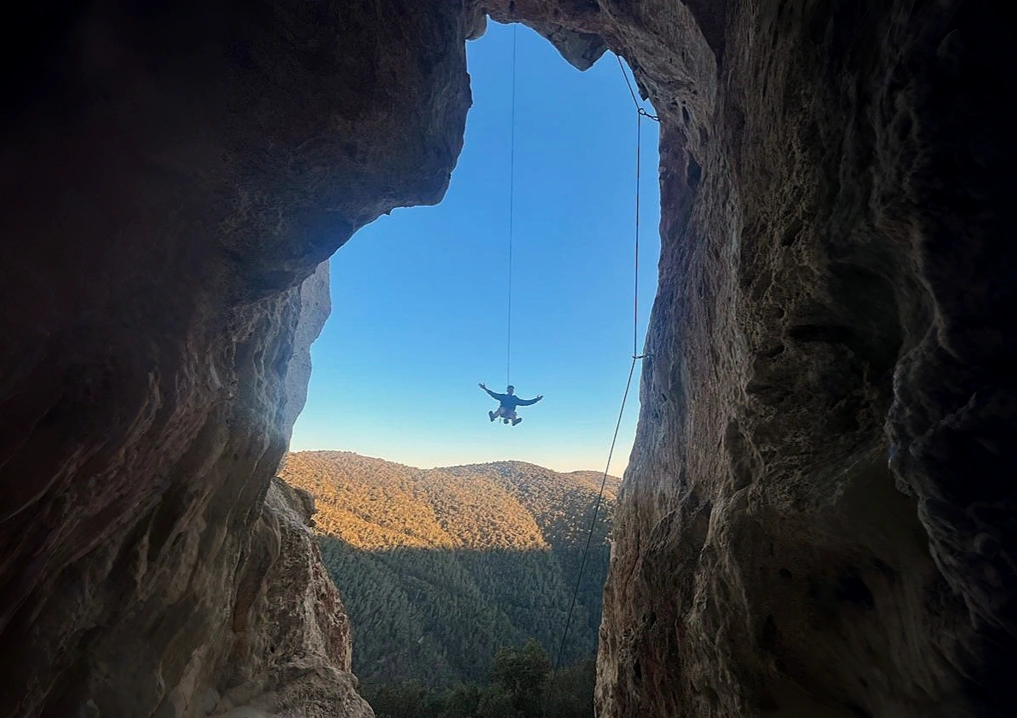
Rock ClimbingSport climbing on natural rock and indoors
№ 03
v.
SkiingSki tours in the Alps with friends and family
Slideshow
№ 01East Africa
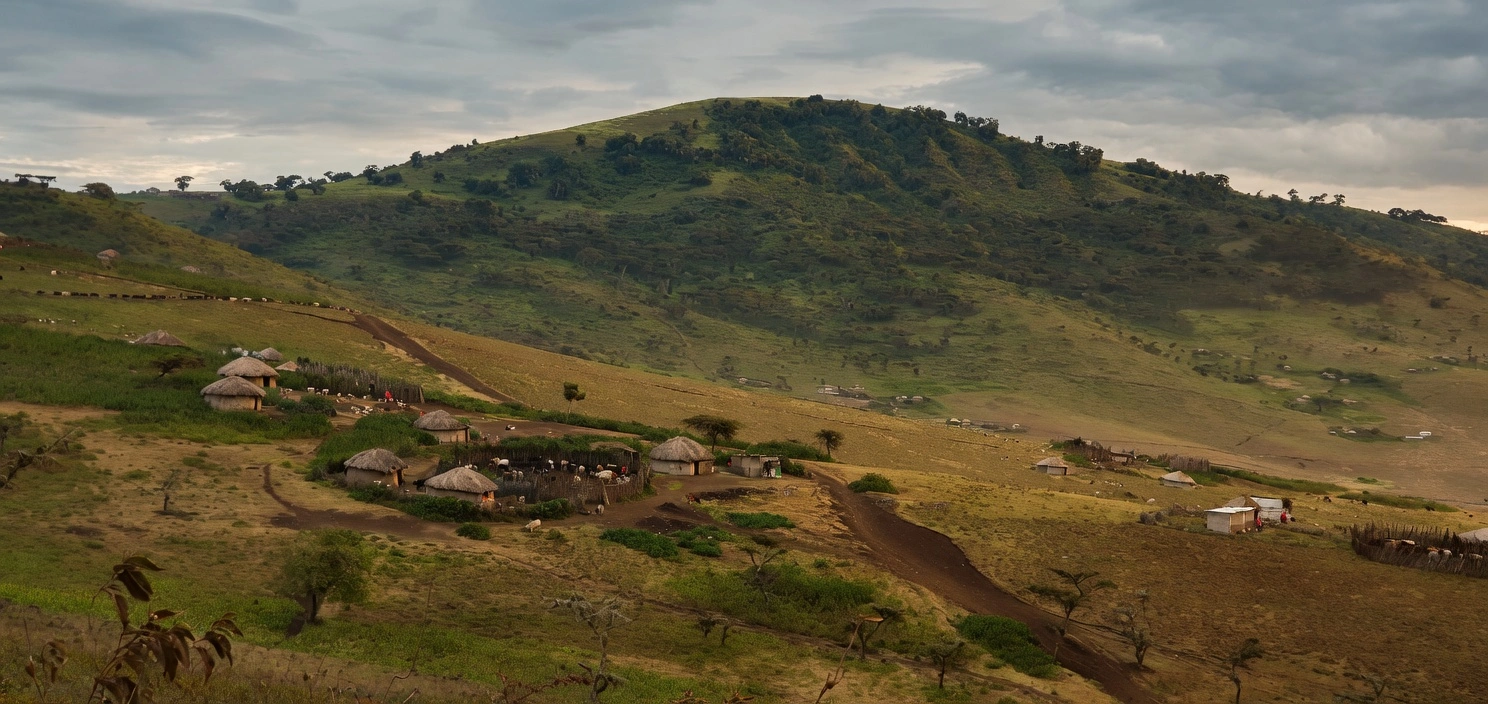
Three weeks across Kenya and Tanzania. Traveling independently through remote regions in a rental car, without fixed itineraries or guided tours.
Masai Mara & SerengetiWitnessed the Great Migration crossing the Mara river, several days tracking the big five.
Ngorongoro CraterExploring the wildlife of the Ngorongoro Crater, a collapsed volcanic caldera.
Lake Natron & Ol Doinyo LengaiHiked to the base of the only active natrocarbonatite volcano on Earth, a site sacred to the Maasai Tribe.
Amboseli & KilimanjaroTwo days at Amboseli National Park, tracking elephant herds at the base of Africa's highest peak.
Days on the road
21
Countries crossed
2
Kilometres driven
2460
Beyond wildlife, the route covered ground few itineraries reach — the Laetoli footprints, a night at Lake Natron, evenings in Maasai villages. Planned independently, navigated mostly offline.
№ 02Nadelhorn
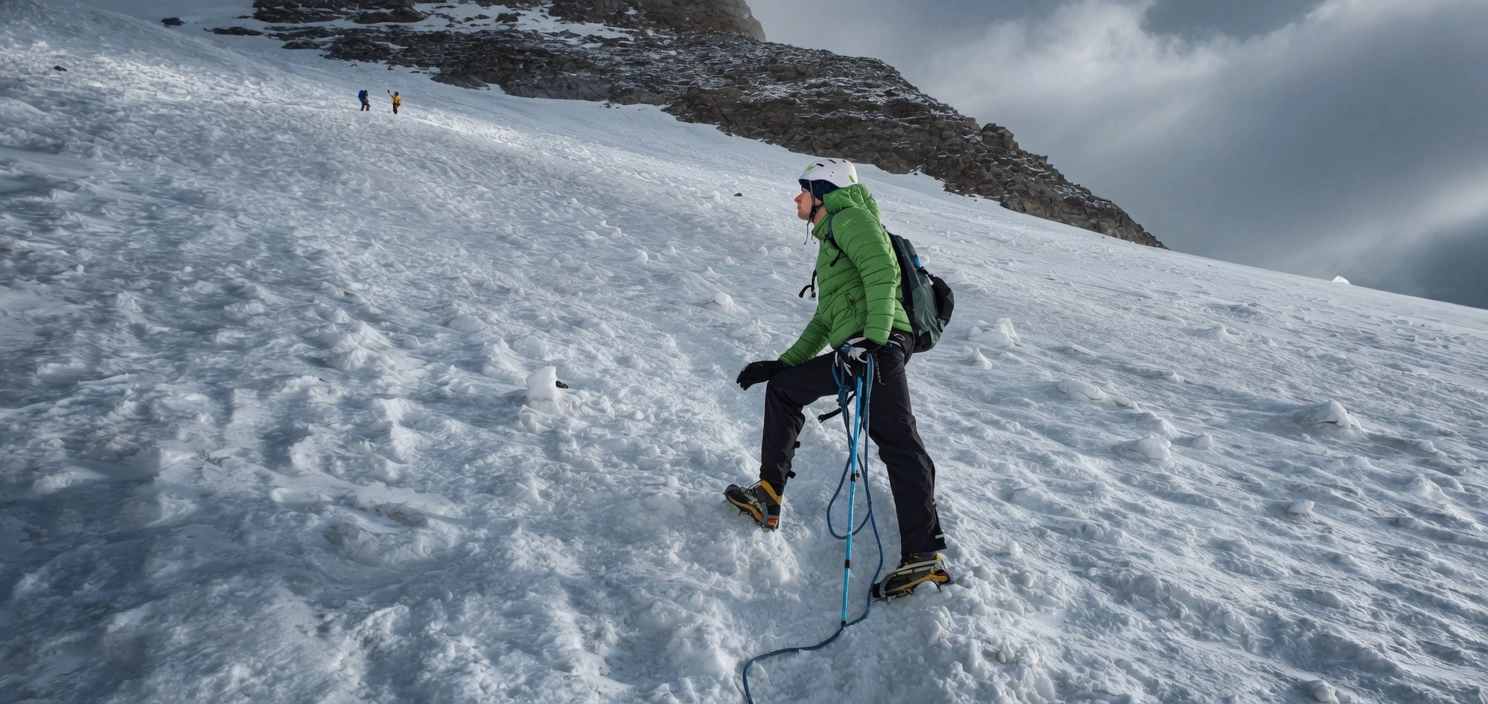
The Nadelhorn above Saas-Fee is a classic alpine 4,000er in the Alps — a long route combining glacier, light rock climbing and a beautiful summit snow ridge.
Hut nightOvernight at the Mischabel Hut (3,329 m), 3 AM start with headlamps on.
Summit at dawnReached the summit at 8 AM, with the Matterhorn visible to the west.
Summit altitude
4327m
Vertical ascent
2600m
Summit Day
11h
The tour combined a glacier crossing, alpine rock, and a long summit ridge.
№ 03On the Rock
I have been climbing since the age of ten, and now do so regularly on a weekly basis. Most weekends I climb in the Blautal valley near Ulm, a limestone crag in the forest. The combination of physical movement, technical problem-solving, and time spent outdoors keeps the sport interesting to me long-term.
Camping & Climbing in LiguriaDuring my university years I made an annual trip with friends to the Ligurian coast, Italy — a week of camping and climbing on rock above the Mediterranean.
Deep Water SoloA discipline where you boulder above open water without a rope. I have done this on a few occasions in Mallorca and Crete — a different kind of challenge from standard sport climbing.
Climbing remains a fixed part of my weekly routine.
№ 04Arabian Peninsula
Oman left the strongest impression of any country on the peninsula. The border crossing from the UAE marks a clear break in development philosophy — the same oil wealth, distinctly different priorities. Where the Emirates focus on scale and modernisation, Oman has deliberately preserved its historical character.
MuscatOld Matrah on foot — the bustling souk, the corniche harbour, and the Sultan's palace sitting at the waterfront.
Nizwa & Jebel ShamsNizwa is the cultural capital of Oman, featuring a medieval fort, rooftop cafes, and a fantastic museum. Climbed Oman's highest mountain, Jebel Shams (3,009 m), overlooking an impressive canyon.
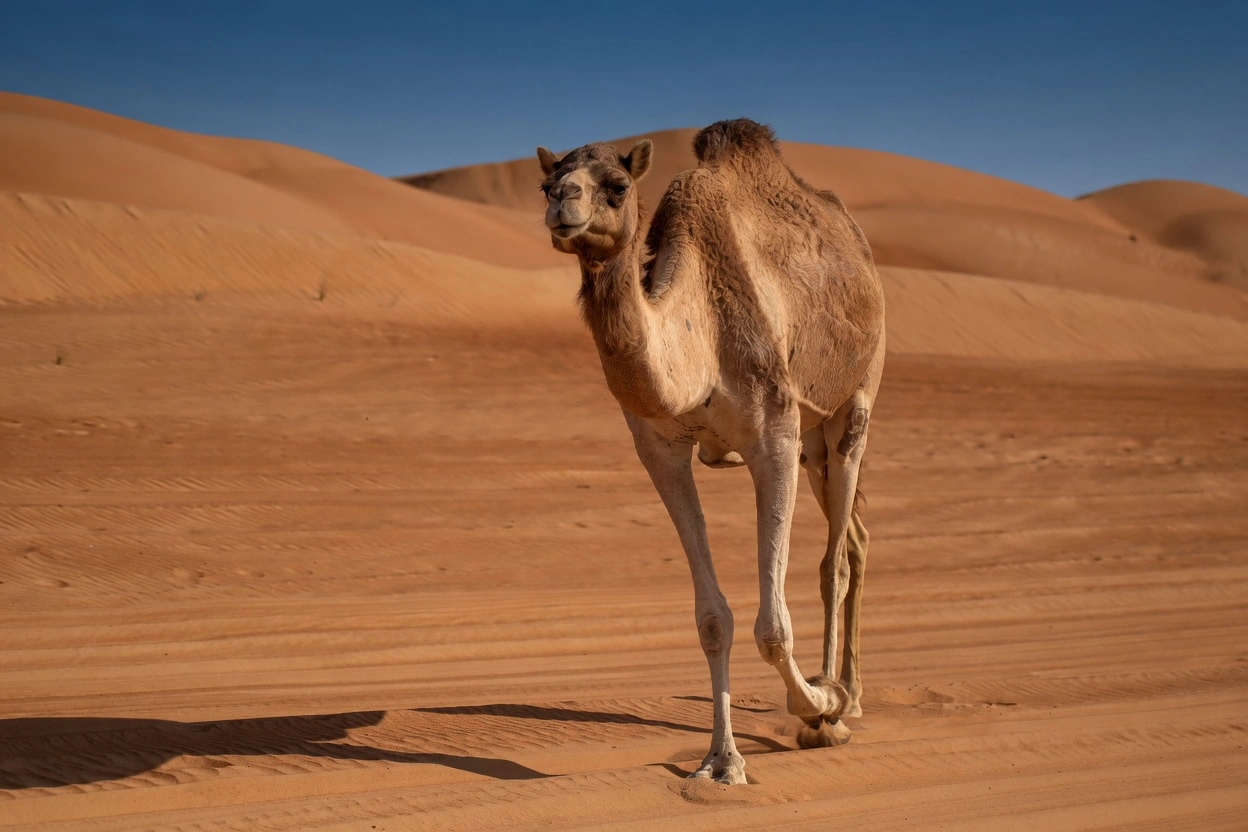
Wahiba SandsTwo days crossing open desert in a Land Cruiser — Bedouin camps, camel herds, and locals drifting over sand dunes. Camped overnight in the open.
Days in Oman
15
Wadis explored
3
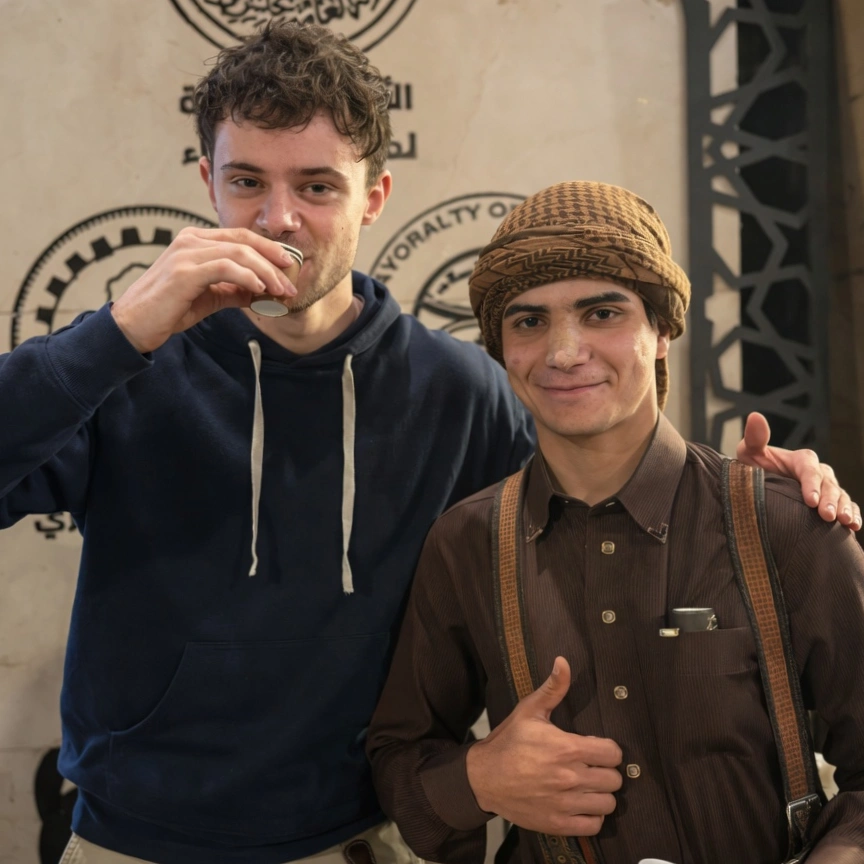
Cups of kahwa
37
What stayed with me most were the landscapes, conversations, and hospitality along the route.
№ 05Mesopotamia
Iraq is one of the most historically layered countries I have visited — and in international perception, one of the least known. The traces of war in the Land of the Two Rivers are clearly visible, as is everything that has outlasted them.
BaghdadAn age-old mega-city with striking, deep-rooted cultural diversity. Explored historic schools, old book streets from the Abbasid period, and numerous monuments and historic buildings spanning various periods.
Karbala, Basra & BabylonCrossed the unique Marshlands by boat, visited the ancient ruins of Babylon, and pushed through the vast crowds of one of the largest pilgrimage gatherings on earth at Karbala.
Conversations started everywhere — teahouses, roadsides, shared meals. A country shaped by hard recent history, where people still meet visitors with remarkable openness.
More Moments
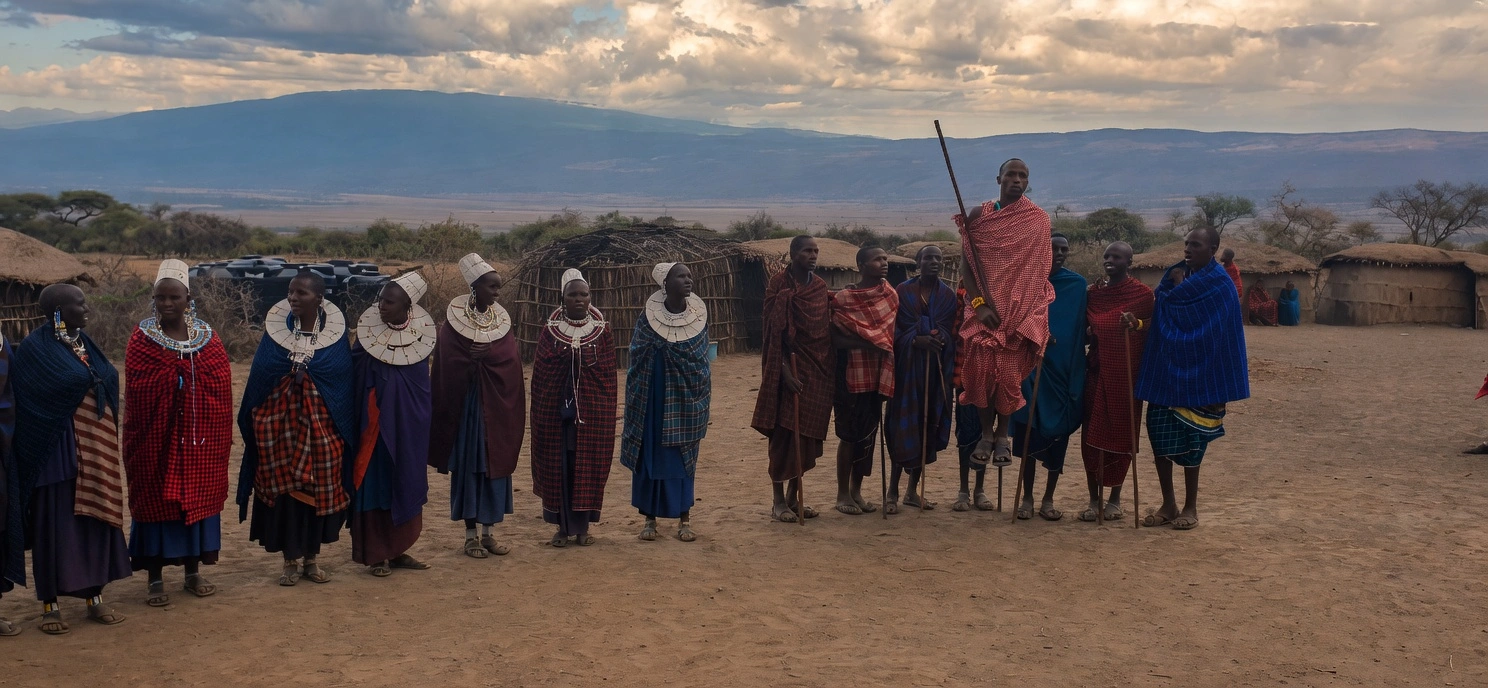
Maasai Tribe performing the traditional jumping dance in Tanzania